


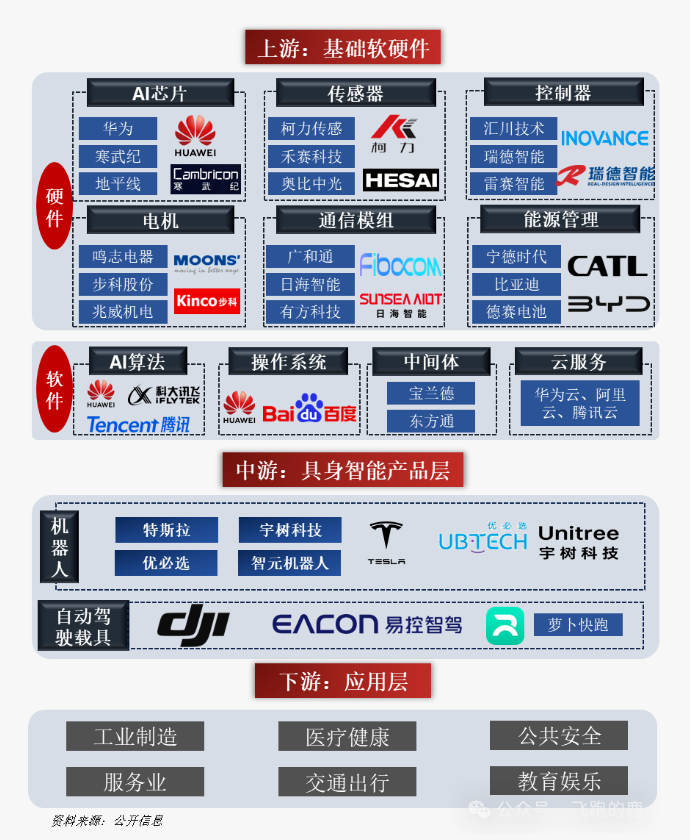
Panorama of the industrial chain
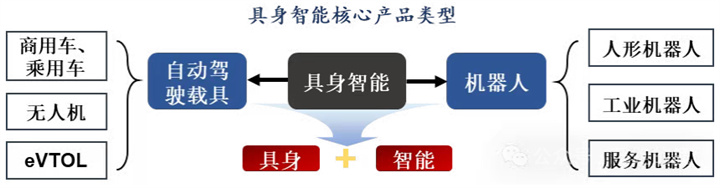
Introduction to embodied intelligence
Simply put, embodied intelligence is equipping artificial intelligence with a physical body that enables it to act, perceive, and learn in the real world like humans, rather than just staying in virtual space. For example, imagine you have a robot companion that can think independently, unlike the smart assistant on your phone that can only communicate with you through the screen. This robot has a physical body and can move freely in the room. It is equipped with multiple "senses": the camera acts as its eyes, helping it observe the surrounding environment; Sensors, like their tactile sense, can sense the temperature, hardness, and other properties of objects; The microphone is like its ears, capable of receiving external sounds.
Through these 'senses', it is able to interact with the real world and independently complete tasks such as cleaning the room on its own. During the cleaning process, if encountering obstacles, it can still find ways to bypass them on its own. In addition, it also has the ability to continuously learn. When cleaning for the first time, it may take a long time or make mistakes, but as experience increases, it will become more proficient. Just like a person may not paint well when they first start painting, but through continuous practice, their skills will gradually improve. Among various forms of embodied intelligence, humanoid robots are considered to have the most promising development prospects.
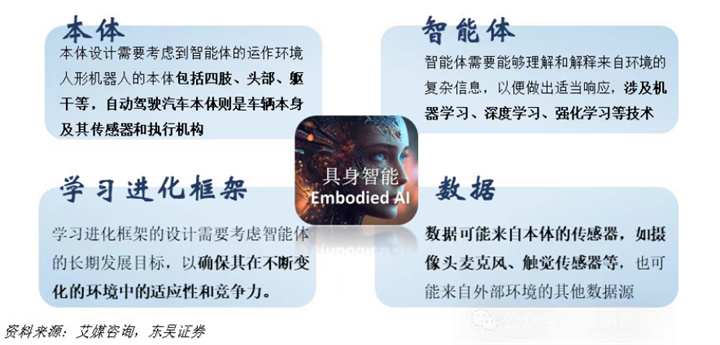
As an important branch of artificial intelligence, embodied intelligence consists of four elements: ontology, intelligent agent, data, and learning evolution framework. Unlike traditional artificial intelligence, its key lies in the ability of intelligent agents to interact with their surrounding environment through physical bodies, and complete a series of complex tasks in real time, from perceiving information, understanding scenes to making decisions and executing actions.
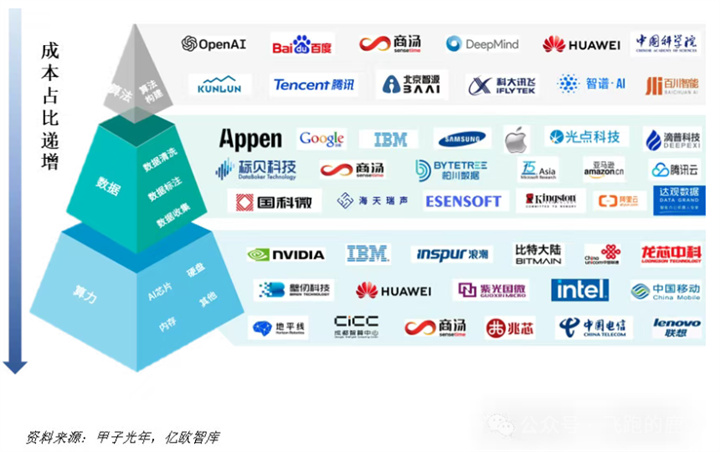
Upstream Industry Chain: Big Model (Computing Power, Algorithms, Data)
The core part of the upstream industrial chain is the AI big model, which mainly includes three core elements: computing power, algorithms, and data, as follows:
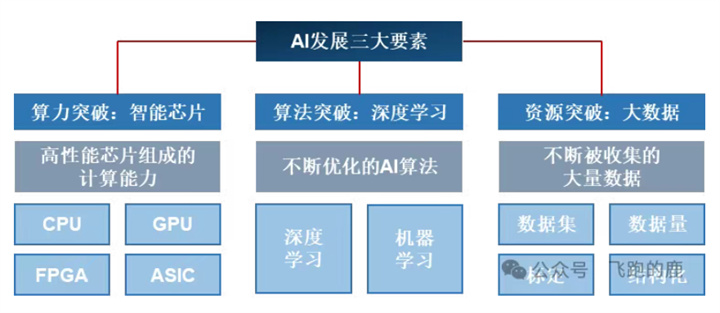
3.1 AI chip - computing power: the engine driving intelligence
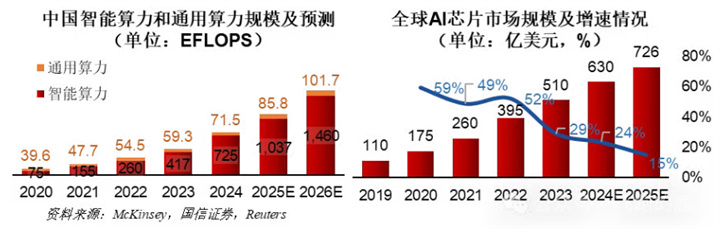
The rapid development of AI big models is strongly driving the demand for computing power. It is expected that by 2025, the global demand for AI computing power will reach 10 times that of 2020. In fields such as intelligent manufacturing, medical imaging, and financial transactions, the use of computing power has significantly increased, driving the proportion of enterprise computing power consumption to exceed 50% of total consumption and reshaping the competitive landscape of the industry.
In the field of AI chips, the market landscape is showing new trends, and domestic chips are accelerating breakthroughs. The significant price increase of Nvidia A100/H100 reflects potential supply chain risks; At the same time, domestic chips are actively breaking through: Huawei Ascend 910B has achieved full stack autonomous controllability, Cambrian MLU370's computing power has exceeded 300TOPS, and Boren BR100 has entered the top tier of global GPUs. Domestic chips are gradually gaining market dominance as a whole.
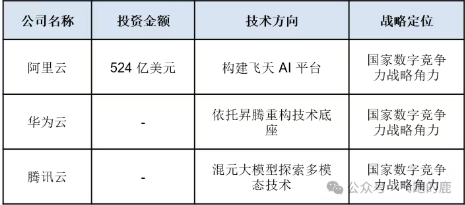
The competition for AI computing power among cloud computing vendors is becoming increasingly fierce. Currently, AWS, Azure, and Google Cloud jointly hold approximately 70% of the global AI cloud market share; The domestic market is also keeping up with this development pace and steadily advancing.
3.2 Algorithm: A Framework for Shaping Thinking
As the core element of AI big models, algorithms cover deep learning frameworks and model optimization strategies.
The revolutionary impact of Transformer: The Transformer architecture has increased the efficiency of sequence data processing by more than ten times, laying the technological foundation for the arrival of the era of large models.
Algorithm optimization and cost control: Faced with high AI training costs (such as the estimated training cost of GPT-4 exceeding $100 million), the application of advanced optimization techniques such as sparsity, knowledge distillation, and quantization can effectively reduce training costs by 30% to 50%.
Competitive situation between open source and proprietary models:
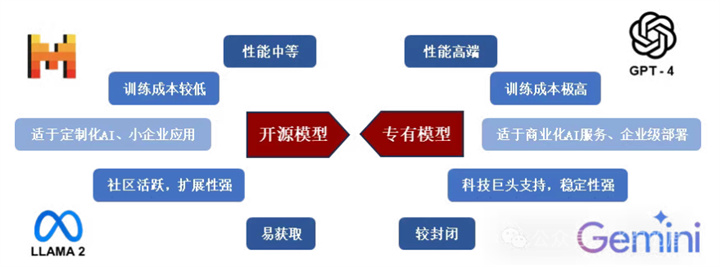
Development trends of cutting-edge algorithms: In 2023, multimodal large models (such as GPT-4V and Gemini) will break through the limitations of text and be able to handle various data types such as images, audio, and video.
The 'From Technology to Application' of Algorithms:
Diversified data sources enhance the universality of models: Multimodal data fusion (such as GPT-4 image text collaboration and PaLM 2 multimodal integration) is breaking through the limitations of single modality and enabling AI to acquire cross domain cognitive abilities.
Development trends of cutting-edge algorithms: AI technology is evolving its own data governance capabilities: self supervised learning extracts knowledge from unlabeled data, anomaly detection algorithms purify polluted data, and automated tools reconstruct data preprocessing processes.
Midstream Industry Chain - Humanoid Robots
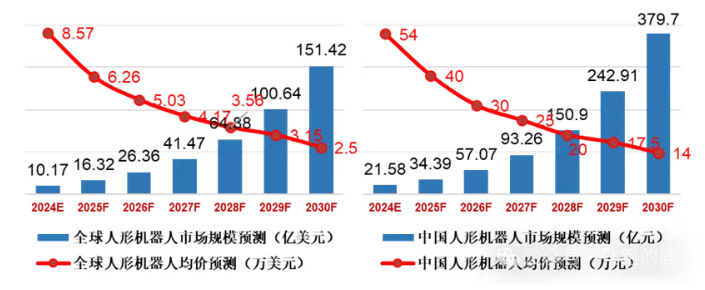
According to GGII's prediction, the global market size is as follows, and product iterations such as Tesla Optimus will accelerate technological maturity, driving the industry chain into a period of rapid development.
The Chinese humanoid robot market will continue to lead global growth, as follows:
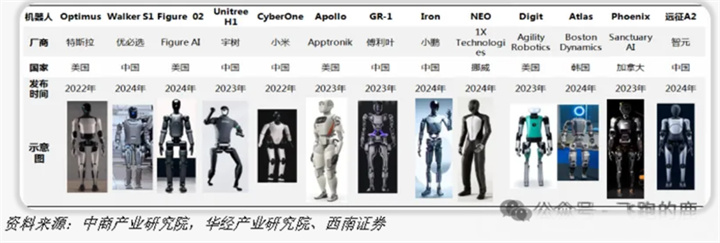
At present, humanoid robots have not yet achieved mass production, and the market is mainly composed of three types of manufacturers:
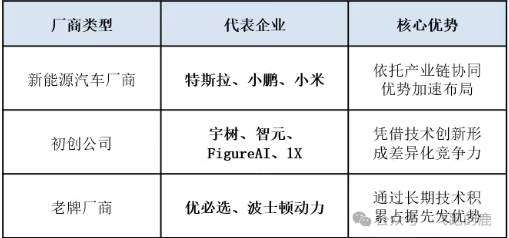
Specifically, as shown below:
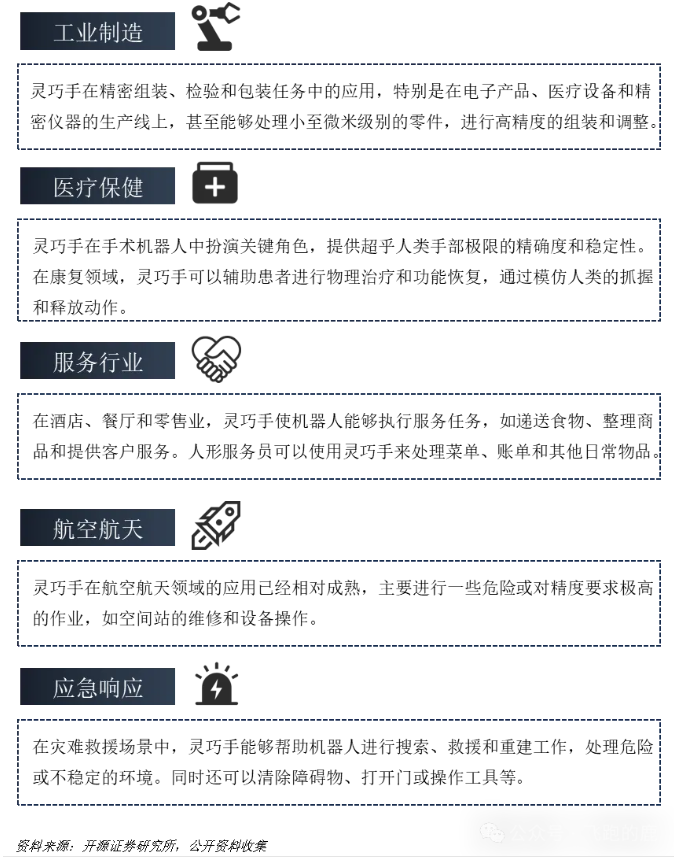
Downstream industrial chain (mainstream application scenarios)
summary
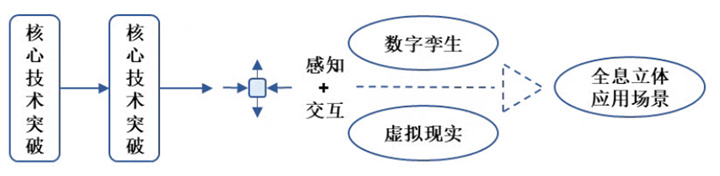
In the future, with the continuous breakthroughs in core technologies and the expansion of application scenarios, embodied intelligence is expected to reshape the human-machine collaboration mode and become an important force in promoting the improvement of social production efficiency and the transformation of lifestyles. This industrial ecosystem that integrates hardware innovation, algorithm evolution, and scenario implementation is ushering in a new era of intelligent materialization for us.